
Queque, the Chilean teatime cake: where the name comes from, history and homemade versions
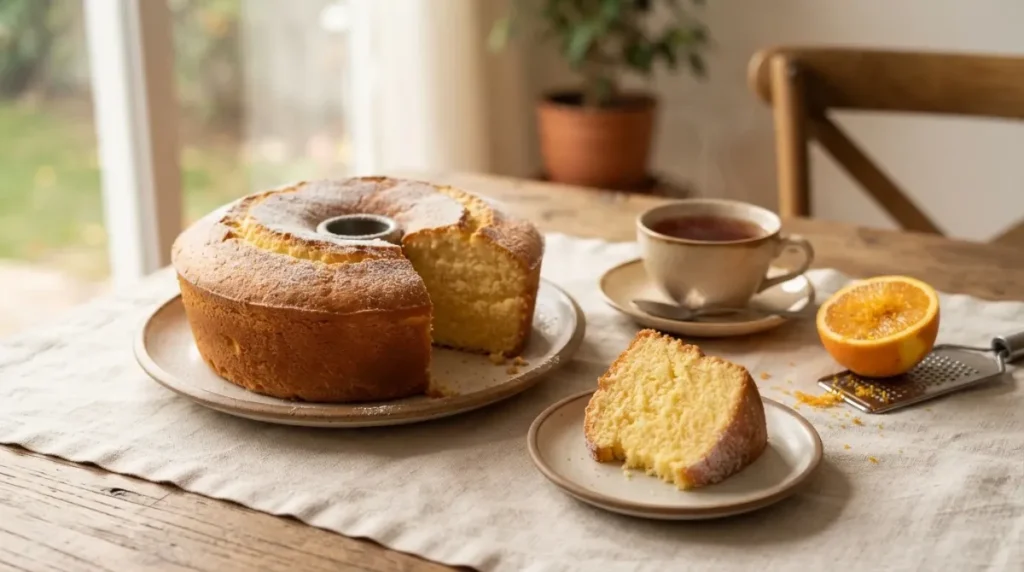
In Chile, queque (pronounced "keh-keh") is the tall, simple loaf or bundt cake that appears at la once, Chile's afternoon tea, cut into slices and served with tea or coffee. It has no filling and no elaborate frosting: its charm is a soft, moist crumb, a hint of vanilla or orange zest, and how easy it is to bake at home. Here's where the name comes from, the oldest known mention in a Chilean cookbook, how it differs from a torta, and the homemade versions Chileans love most.
Queque, torta or bizcocho? What each word means in Chile
Across the Spanish-speaking world this kind of cake goes by many names: bizcocho, bizcochuelo, panetela or pastel, depending on the country. In Chile, each word has its own place in the kitchen:
- Queque: a batter baked whole in a pan and served as is, in slices, much like a pound cake or bundt cake. At most it gets a dusting of icing sugar or a simple glaze.
- Torta: a layered celebration cake with fillings such as manjar (Chilean dulce de leche), cream, jam or fruit, and a frosting. It's for birthdays and special occasions.
- Bizcocho: the light sponge used as the base for a torta, cut into layers and soaked in syrup.
- Kuchen: a legacy of German immigration in southern Chile: a pastry base topped with fruit, such as apple or murta berries.
Where the word "queque" comes from
Queque is the Spanish adaptation of the English word cake. It isn't unique to Chile: the same loanword, spelled queque or keke, is used in Bolivia, Peru, Costa Rica, Nicaragua and the Canary Islands. In Chile it took root so firmly that nobody thinks of it as a foreign word any more.
The oldest known mention: La negrita Doddy (1911)
The earliest reference to the name queque that has been pointed out in Chile is in La negrita Doddy: nuevo libro de cocina, a 427-page cookbook published in Santiago in 1911 by the Sociedad Imprenta y Litografía Universo. According to Memoria Chilena, the digital collection of Chile's National Library, the book is based on the recipe collection of Julio Grauffé, a cook at the Jockey Club in Paris, and set out to teach home cooking along with some of the haute cuisine of the time.
According to those who have studied the book, its recipes include some quequitos Victoria (little Victoria cakes) made with chocolate and ginger, which is usually cited as the first record of the word in a Chilean cookbook. The name itself hints at the European influence on the baking of well-off families in the early twentieth century. The full book has been digitised and can be read free of charge on the Memoria Chilena website.
Being the oldest known mention doesn't mean the word wasn't used earlier in everyday speech: cookbooks usually record words once they are already in use.
Queque and la once, Chile's teatime
The natural home of the queque is la once, the late-afternoon meal that in many Chilean households replaces dinner. The origin of the name is still uncertain. The most repeated explanation is that "once" (Spanish for eleven) was a discreet code for aguardiente, a spirit whose name has eleven letters, but anthropologist Sonia Montecino has pointed out that this isn't documented. Another theory links the habit of afternoon tea to the British families who settled in Valparaíso.
Whatever its origin, the queque is a perfect fit for la once: it's baked ahead, keeps for several days well covered and is shared in slices alongside bread, avocado and tea.
"Creerse el hoyo del queque" and other Chilean sayings
The traditional queque is baked in a round tube pan that leaves a hole in the middle. That gave rise to one of the most Chilean expressions there is: "creerse el hoyo del queque", literally "to think you're the hole in the cake", said of someone conceited who believes they are the centre of everything. Chileans also say "cortar el queque", "to cut the cake", meaning to be the one who makes the decisions in a group.
The most popular homemade versions
The base is almost always the same: flour with baking powder, sugar, eggs, fat (butter or oil) and a liquid such as milk or juice. From there, every household has its favourite:
- Vanilla queque with zest: the simplest, scented with lemon or orange zest.
- Marble queque (marmoleado): two batters, one vanilla and one with cocoa, swirled together.
- Chocolate queque: with cocoa powder or melted chocolate in the batter; a children's favourite.
- Orange queque: with orange juice and zest, often soaked with orange syrup straight out of the oven.
- Banana queque: uses very ripe bananas for moisture and sweetness.
- Carrot and walnut queque: grated carrot keeps it moist for days.
- Walnut queque: chopped walnuts in the batter, a winter teatime classic.
- Yoghurt queque: the practical version measured with the yoghurt pot itself, no scale needed.
Pans: tube, loaf or individual quequitos
- Round tube or bundt pan: the classic. The central tube carries heat into the middle of the batter, so the cake bakes evenly and ends up with the famous hole.
- Loaf pan: gives a taller cake that's easy to slice for teatime or lunchboxes.
- Quequitos: individual cakes baked in muffin tins or paper cases; they bake much faster.
Tips for a light, fluffy homemade queque
- Room-temperature ingredients: take the eggs and butter out of the fridge an hour ahead. Cold ingredients make the batter split and the cake heavier.
- Beat well at the start: the butter and sugar should be pale and creamy; that air helps the cake rise.
- Don't overmix at the end: once you add the flour, mix only until no dry patches remain. Overmixing makes it dense and full of tunnels.
- Preheat the oven: most queques bake at about 180 °C (350 °F). Put the cake in only once the oven is at temperature.
- Don't open the oven too soon: during the first 20 to 25 minutes the batter is still rising and can collapse.
- The skewer test: it's done when a skewer pushed into the thickest part comes out clean or with dry crumbs, and the top is golden and springs back when pressed lightly.
- Unmould while warm: wait 10 to 15 minutes before turning it out. Hot, it breaks; cold, it sticks to the pan.
How to keep it from drying out
Once cool, keep it covered with a clean tea towel or in an airtight bag or tin at room temperature; it stays good for three or four days. What dries it out most is leaving the cut side exposed, so cover the cut well. To keep it longer, freeze it in well-wrapped slices and thaw them at room temperature.
Frequently asked questions
Why do Chileans call cake "queque"?
Because it's the Spanish adaptation of the English word cake. The same loanword is used in Bolivia, Peru, Costa Rica, Nicaragua and the Canary Islands.
Is a queque the same as a torta?
No. In Chile a queque is a cake served whole, without filling, similar to a pound cake; a torta is built in layers with fillings and frosting and is made for special occasions.
What does "creerse el hoyo del queque" mean?
To be full of yourself or think you're the centre of attention. It comes from the hole left by the central tube of the traditional pan.
Why does my cake crack on top?
That's normal: the surface sets and firms up before the centre, which keeps rising and eventually opens a crack. If it cracks a lot or browns too fast, your oven is probably too hot.
Why did my cake sink after I took it out of the oven?
Usually because the centre was underbaked or the oven was opened too early. Do the skewer test before taking it out and avoid opening the door during the first part of baking.
Looking for more Chilean teatime ideas? Try our Chilean quince paste (dulce de membrillo), served on cheese or toast.
Sources
- Memoria Chilena, National Library of Chile: La negrita Doddy: nuevo libro de cocina (Santiago, 1911), catalogue record and digitised book, and mini-site on La Negrita Doddy (in Spanish).
- Spanish-language Wikipedia, Bizcocho (names for sponge cake by country and section on "queque").
- Diccionario etimológico de Chile (DeChile.net): queque (in Spanish).
- The Clinic (2019), «La once», la merienda chilena, with comments from anthropologist Sonia Montecino (in Spanish).
Leave a Reply