

Chilean-style sangria (sangría chilena): easy recipe
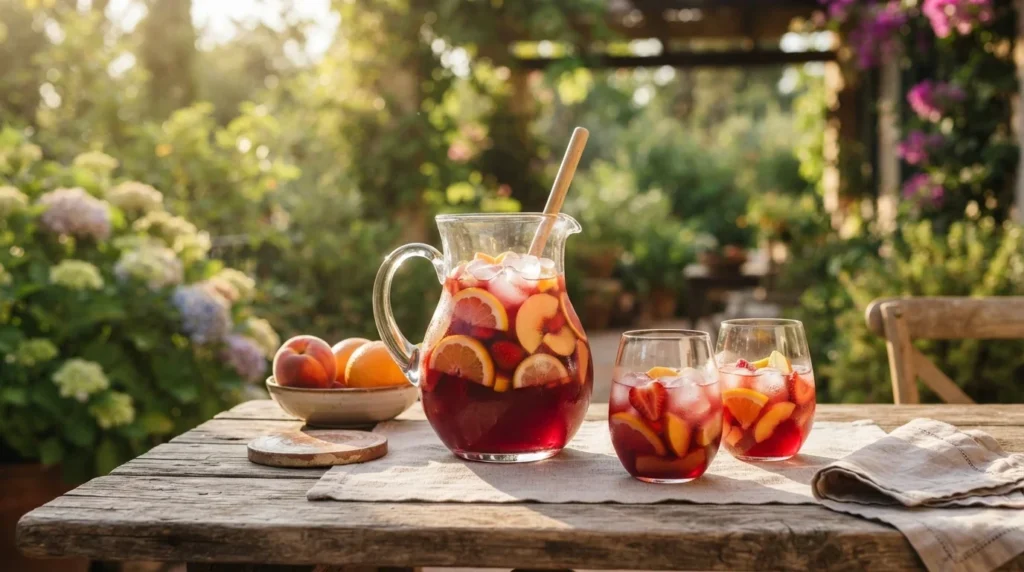
Sangria is red wine with chopped fruit, a little sugar and a splash of liqueur, served ice cold from a pitcher. In Chile it's made with Chilean wine and summer fruit, and often with a dash of pisco. This recipe makes a 6-glass pitcher, takes 20 minutes to put together and just needs a couple of hours in the fridge.
Drink responsibly: sangria is an alcoholic drink, even if the fruit and sugar make it taste mild. It is not suitable for minors, pregnant women or anyone who is going to drive.
Where does sangria come from?
Sangria isn't Chilean: it comes from the Iberian Peninsula. Its exact origin isn't documented, but most accounts place it in Spain and Portugal around 1800, and the Royal Spanish Academy added it to its dictionary in 1803 as a mix of lemon water and red wine. Today, under a European Union rule, only producers in Spain and Portugal can sell a product under the name sangria. World Sangria Day is celebrated every December 20.
In Chile it became a summer drink, shared by the pitcher at barbecues, at the beach or on a terrace. What makes it "Chilean" is what goes in: Chilean red wine, seasonal peaches, strawberries or apples and, in many versions, pisco. The Chilean supermarket chain Jumbo, for example, publishes a "sangría chilensis" with pisco and peaches.
Sangria, borgoña and clery: not the same thing
Chile has its own wine and fruit punches. Borgoña is red wine with strawberries and sugar, and clery is its white-wine version, with strawberries and sometimes peaches. In their classic form they're just wine, fruit and sugar. Sangria, by contrast, adds orange, lemon, a mix of fruits, liqueur and often something fizzy.
About this recipe
- Young Chilean wine: a fruity, unoaked red that doesn't need to be expensive.
- Seasonal fruit: orange and lemon for freshness; apple, peaches and strawberries for sweetness.
- With pisco: just a little, for body without overpowering. It's optional.
- Bubbles last: the sparkling water goes in right before serving, so the sangria stays fresh and fizzy.
Chilean-style sangria
Sangria made with Chilean red wine, summer fruit, orange juice and a splash of pisco, chilled to blend the flavors and finished with sparkling water when served.
- Prep
- 20 min
- Total
- 20 min
- Resting
- 2 to 4 h in the fridge
- Difficulty
- Very easy
- Yield
- 6 glasses of about 250 ml (one 2-liter pitcher)
Ingredients
For the pitcher
- 750 ml Chilean red wine 1 bottle. A young, fruity Cabernet Sauvignon, Merlot or Carménère; no need for a reserva.
- 1 orange Thinly sliced with the peel, well washed.
- 1 lemon Thinly sliced, seeds removed.
- 1 red apple Cut into 1 to 2 cm (½ to ¾ inch) cubes, unpeeled.
- 2 ripe peaches Cubed. Out of season, use 1 pear.
- 1 cup strawberries (optional) Hulled and halved.
- 3 tbsp sugar Adjust to taste: 2 to 5 tablespoons depending on how sweet the fruit is.
- 50 ml pisco The Chilean touch. You can use orange liqueur or brandy instead, or leave it out.
- 250 ml fresh orange juice From about 3 juicy oranges.
- 1 cinnamon stick (optional) One is enough for one or two pitchers.
To serve
- 250 ml sparkling water or club soda, very cold Added just before serving so it keeps its bubbles.
- plenty of ice
Equipment
- Glass pitcher of at least 2 liters
- Cutting board and knife
- Long wooden or bar spoon
- Citrus juicer
- Plastic wrap or a lid for the pitcher
Step-by-step method
-
Wash and cut the fruit 10 min
Wash the orange, lemon, apple and peaches well, since they go in with the peel. Slice the orange and lemon into thin rounds, about ¼ inch (half a centimeter) thick, and remove the lemon seeds. Cut the apple and peaches into 1 to 2 cm cubes, discarding the core and pit. If using strawberries, hull and halve them.
-
Macerate the fruit with sugar and pisco 10 min
Put all the fruit in the pitcher, sprinkle with the sugar, add the pisco and cinnamon stick, and stir gently with the long spoon. Let it sit about 10 minutes: the fruit starts to release its juice and the sugar almost completely dissolves.
-
Add the wine and juice 2 min
Pour the red wine and orange juice over the fruit and stir until no sugar is left at the bottom. Taste: if you want it sweeter, add another tablespoon of sugar and stir until dissolved.
-
Chill so the flavors blend 2 to 4 h
Cover the pitcher and refrigerate for 2 to 4 hours. During that time the wine takes on the fruit's aroma and the fruit soaks up the wine. Don't leave the citrus in much longer: the white pith starts to turn bitter.
-
Finish and serve 3 min
Just before serving, remove the cinnamon stick, add the very cold sparkling water and stir once, gently. Fill glasses with ice and serve the sangria with some fruit in each glass. It should look ruby red, with fine bubbles and the fruit floating.
Substitutions and variations
- White sangria: with white wine (a Sauvignon Blanc works very well), white peaches, strawberries and orange liqueur.
- No pisco: use orange liqueur or brandy instead, or simply leave it out.
- With soda instead of sparkling water: lemon or orange soda makes it sweeter; if you use it, cut back on the sugar.
- Other fruit: apricots, cherries, mango or raspberries, depending on what's in season.
- Alcohol-free: replace the wine with unsweetened red grape juice and the pisco with more orange juice.
Tips for a great sangria
- Everything cold: chill the wine, juice and sparkling water ahead of time; you'll need less ice and it won't get watered down.
- Dissolve the sugar before the wine: sugar is hard to dissolve in cold wine. That's why it goes in first with the fruit and pisco.
- Taste before chilling: cold dulls sweetness. If it tastes just right at room temperature, it will seem less sweet once chilled.
- Ice in the glass, not the pitcher: ice in the pitcher melts and dilutes whatever is left for later.
Common mistakes and how to avoid them
- Leaving the citrus in overnight: the white pith makes the wine bitter. If you make it well ahead, add the orange and lemon only for the last 4 hours.
- Adding the bubbles at the start: they go flat in the fridge. They go in last.
- Using a heavily oaked wine: barrel-aged, tannic reds clash with fruit and sugar. A young wine is better.
- Overdoing the liqueur: sangria is a light drink meant for sharing; more pisco doesn't improve it and makes it stronger than it seems.
How to store it
Sangria is at its best the day it's made. If there's some left, remove the fruit, strain the liquid and keep it in a covered bottle in the fridge; we recommend drinking it the next day. When serving, add fresh fruit and a little sparkling water. It isn't heated or frozen.
What to serve with it
- A barbecue: anticuchos (skewers), longaniza sausages or ribs, with pebre and Chilean tomato salad.
- Snacks: cheese and ham boards, olives or small cheese empanadas.
- Spanish food: a potato tortilla or croquettes, as it's served in Spain.
Find more drinks in drinks, such as southern Chile's apple chicha.
Watch how it's made
In this Spanish-language video, Chilean cook Álvaro Barrientos makes a sangria and a borgoña with food journalist Daniel Greve. It's a good way to see the two drinks side by side.
Frequently asked questions
How do you make sangria?
Chop fruit, macerate it with sugar and a little liqueur, add red wine and orange juice, chill for a couple of hours and finish with sparkling water and ice when serving. The exact steps and amounts are in the recipe card above.
Which Chilean wine is best for sangria?
A young, fruity red with no oak aging: an everyday varietal Cabernet Sauvignon, Merlot or Carménère works very well. There's no point using an expensive wine, since the fruit and sugar mask its nuances.
How far ahead can I make it?
Ideally 2 to 4 hours before. You can leave the fruit macerating in the wine from the morning if you hold back the citrus and add it for the last few hours. The sparkling water and ice always go in at serving time.
What's the difference between sangria and tinto de verano?
Tinto de verano is simpler: red wine with soda or sparkling water, and at most a slice of citrus. Sangria has macerated fruit, sugar and a splash of liqueur.
Is sangria Chilean?
No, it's of Spanish and Portuguese origin. It's very popular in Chile in summer and made with Chilean wine and fruit, but Chile's own wine punches are borgoña and clery.
Nutrition information
We don't publish a nutrition table because the sugar and alcohol vary with the wine, the fruit and how much sugar and pisco you use.
Sources
- Cadena 3, Sangría, la bebida veraniega y económica que trascendió fronteras (origin and EU rule; Spanish).
- Billiken, ¿Cuál es la bebida nacional de España? (1803 RAE definition; Spanish).
- Jumbo, Sangría chilensis (Spanish).
- Pauta, Día mundial de la sangría (2023, Spanish).
- Radio Agricultura, sangria the Chilean way (2023, Spanish).
- Meteored Chile, Las jarras de verano más refrescantes (clery; Spanish).
- The Clinic, La ruta de la sangría (difference from tinto de verano; Spanish).
- Álvaro Barrientos, Borgoña v/s sangría (YouTube, 2020, Spanish).
Leave a Reply